I’ve spent my entire career inside organizations that were designed in the 1800s.
That’s not hyperbole. The modern corporation — with its board of directors, hierarchical management layers, quarterly reporting cycles, and fundamental assumption that workers trade time for wages while shareholders collect returns — is essentially a Victorian invention. It was refined in the early twentieth century by people like Frederick Taylor and Alfred Sloan, who optimized it for industrial-scale production. And then we just… kept using it. Through the computing revolution, the internet revolution, the mobile revolution. The technology changed everything about how we work except the structure of the organizations we work inside.
I didn’t think much about this until I started building an AI agent in my basement.
Here’s what happened: I was configuring Zephyr — my personal AI agent, built on open-source tooling and running on a Mac mini — and I realized I was making decisions about governance. Not the abstract, theoretical kind. Practical governance: Who can this agent talk to? What systems can it access? How does it report its decisions? Who has override authority? What happens when it encounters a situation its rules don’t cover?
These are the same questions every organization faces. And I was solving them the same way I’d seen them solved in every company I’d worked for: centralized authority, explicit permissions, top-down control. I am the sole arbiter of what Zephyr does because that’s the only governance model I know.
But what if it isn’t the only model that works?
A Brief, Honest History of DAOs
Let’s start with the elephant in the room. Decentralized Autonomous Organizations have a PR problem, and it’s entirely self-inflicted.
In 2016, a project called simply “The DAO” launched on Ethereum with $150 million in crowdfunded capital. It was going to be the future of venture capital — a decentralized investment fund where token holders voted on which projects to fund. It lasted about three months before a smart contract vulnerability allowed an attacker to drain roughly $60 million. The resulting chaos split the Ethereum blockchain in two and became the crypto industry’s most expensive lesson in the difference between “code is law” and “code has bugs.”
I was watching when it happened. Not as an investor — I was still in the “this is interesting but I’m not putting real money in” phase — but as someone who’d been thinking about what organizations could look like if you removed the assumption that you needed a CEO at the top making decisions. The DAO hack didn’t kill my interest. But it did teach me something important: technology that encodes governance rules is only as good as the rules it encodes.
Since then, the DAO landscape has matured considerably, though you wouldn’t know it from mainstream coverage. The stories that make headlines are still mostly about speculation: ConstitutionDAO trying to buy a copy of the Constitution, or various meme-driven DAOs pooling money for publicity stunts. These are entertaining but not particularly useful for understanding what DAOs actually represent.
What’s more interesting is what’s happening below the headlines. There are now thousands of DAOs operating across a range of domains, and the ones that work — the ones that have survived multiple market cycles — look nothing like the speculative experiments that get media attention. They look like new kinds of organizations.
What a DAO Actually Is (No, Really)
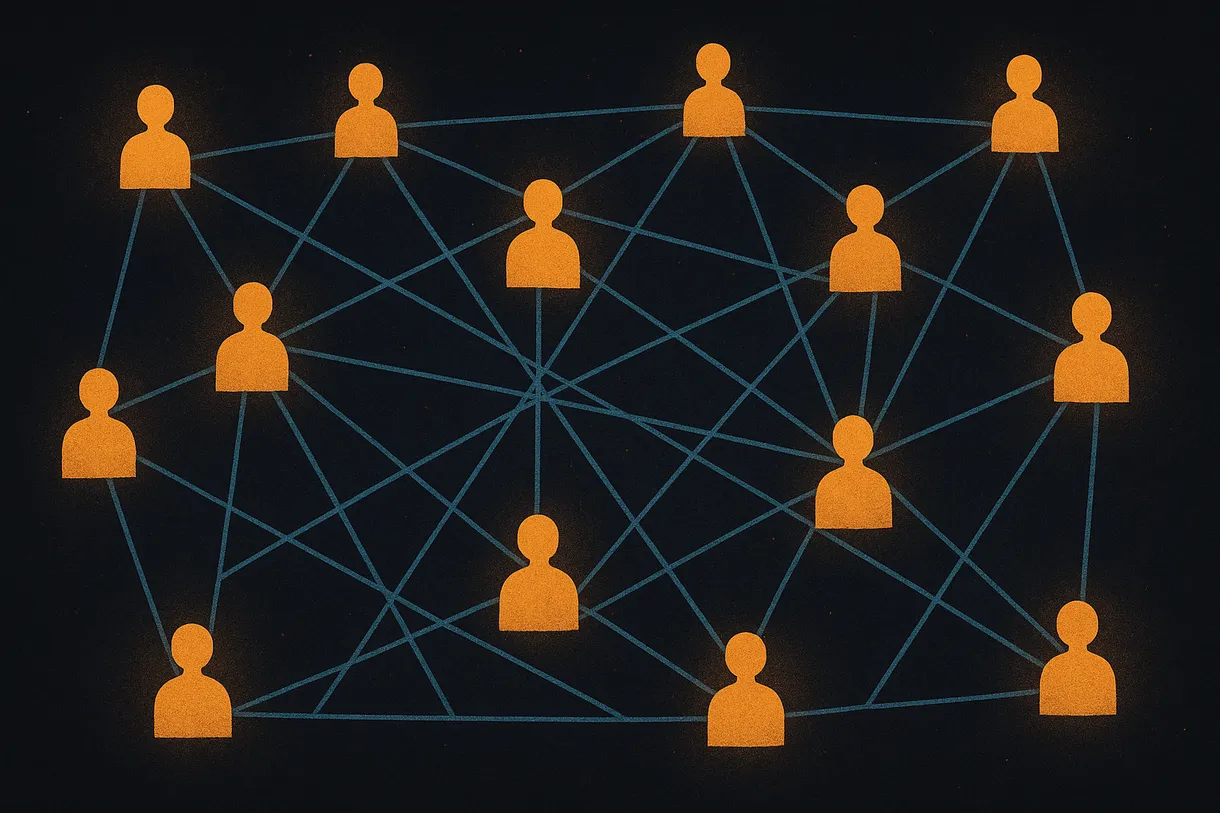
Strip away the jargon and a DAO is simply an organization where the rules are encoded in software rather than in legal documents, and where decisions are made collectively by members rather than by a management hierarchy.
That sounds radical until you think about it for more than thirty seconds. Every organization runs on rules. The rules in a traditional corporation are encoded in articles of incorporation, bylaws, employment contracts, policy manuals, and the informal norms that develop over time. These rules are enforced by people — managers, HR departments, legal teams — who interpret and apply them with varying degrees of consistency and fairness.
A DAO takes those same functions and implements them as smart contracts: self-executing code that runs on a blockchain, transparent to all members, applied identically to everyone. Want to propose a change? Submit it to the contract. Want to vote? Your vote is recorded immutably. Want to see how funds are being spent? It’s all on-chain, auditable by anyone.
This doesn’t eliminate governance problems. It transforms them. Instead of asking “Can we trust the people in charge?” you ask “Can we trust the rules we’ve written?” Instead of organizational politics — who knows who, who’s in the inner circle, who gets the information first — you get algorithmic governance where the rules apply equally regardless of who you are.
The problems that emerge are different but real. Smart contracts have bugs. Voting systems can be gamed. Token-based governance can concentrate power among wealthy participants. But these are engineering problems, solvable through better design — unlike the political problems of traditional organizations, which are fundamentally about human nature and resistant to any amount of organizational redesign.
The Worker Collective Problem
Here’s where DAOs connect to everything else this series has been building toward.
In The Acemoglu Problem, I laid out the case that technology consistently concentrates capital while depressing wages — not because technology is inherently extractive, but because the organizational structures through which technology is deployed are designed to capture value for owners, not workers. In Mindful Machines, I argued that AI development done responsibly looks radically different from the corporate model. And in Blockchain Beyond Bitcoin, I made the case that blockchain’s real value is as trust infrastructure for a decentralized world.
DAOs are where these threads converge. They’re the organizational form that could — emphasis on could — break the pattern Acemoglu identified. Here’s why.
The fundamental problem with worker cooperatives has never been ideological. Most people, when presented with the concept of an organization owned and governed by the people who do the work, think it sounds great. The problem has always been operational. Traditional cooperatives face coordination overhead that scales brutally with size. Decision-making by committee is slow. Institutional knowledge concentrates in founders and long-term members. And when disputes arise, there’s often no efficient mechanism for resolution that doesn’t devolve into factional politics.
These are the problems DAOs were literally designed to solve. Transparent voting reduces coordination overhead. Smart contracts automate routine governance. On-chain records prevent institutional knowledge from becoming an informal power base. And because the rules are code, they can be iterated and improved systematically, the way you’d improve any software.
I’m not being naive here. I’ve seen enough failed cooperatives and enough failed DAOs to know that organizational design alone doesn’t solve human problems. But I’ve also seen enough successful ones to know that the right structure can make human problems more manageable. And the structure a DAO provides — transparent, rule-based, collectively governed — is purpose-built for the kind of worker collectives that could actually redistribute the value AI creates.
What Actually Works: Three Models
Rather than theorize in the abstract, let me walk through three DAO models that are actually functioning. Not perfectly — nothing functions perfectly — but well enough to demonstrate that this isn’t vapor.
The Service DAO
Raid Guild is a DAO of web3 developers and designers who take on client projects collectively. It functions something like a freelancer cooperative: members join through a process (demonstrating skills, contributing to existing projects), client work is scoped and priced by the group, and revenue is distributed based on contribution rather than hierarchy.
What makes this different from a traditional agency isn’t the technology — it’s the power dynamics. No partner takes a disproportionate cut. No rainmaker controls the client relationships. Work gets distributed based on capability, and the smart contracts that manage payment ensure that distribution actually happens as agreed, not as the person with the most leverage decides after the fact.
Is it perfect? No. Raid Guild has struggled with quality control, member engagement, and the free rider problem that plagues every collective. But it’s been operating since 2020, has completed hundreds of projects, and has created a model that dozens of other service DAOs have replicated and refined.
The Protocol DAO
MakerDAO — now rebranded as Sky — governs the DAI stablecoin, one of the largest decentralized financial instruments in the world. MKR token holders vote on protocol parameters: stability fees, collateral types, risk management strategies. It’s essentially a decentralized central bank, and it’s been managing billions of dollars in assets since 2017.
MakerDAO is instructive because it shows both the power and the limits of on-chain governance. The system works: DAI has maintained its dollar peg through multiple market crashes, the governance process is transparent and functional, and the protocol has adapted to changing market conditions through community decision-making.
But MakerDAO also demonstrates the plutocracy problem. Token-based voting means that large holders — often venture capital firms who invested early — have outsized influence. The community has worked to mitigate this through delegation, reputation systems, and other mechanisms, but the tension between “one token, one vote” and genuine democratic governance remains unresolved. It’s the DAO version of a problem democracies have wrestled with forever: how do you prevent concentrated wealth from dominating collective decision-making?
The Commons DAO
Gitcoin has funded over $60 million in public goods — primarily open-source software — through a mechanism called quadratic funding, where small donations from many contributors are matched more generously than large donations from few contributors. It’s a mathematical approach to funding that explicitly favors broad community support over whale patronage.
This model is closest to what I think the future looks like for AI-era worker collectives. Gitcoin isn’t funding companies. It’s funding commons — shared resources that benefit everyone. And the mechanism it uses doesn’t just distribute money; it generates signal about what the community actually values, in a way that resists the distortions of traditional funding (where what gets built is whatever VCs think will generate returns, not whatever people actually need).
Apply this model to AI development and something interesting happens. Instead of AI tools being built by corporations to serve corporate goals, you get AI tools funded by the communities that will use them, built by the developers those communities support. The alignment problem — in the economic sense, not the AI safety sense — gets solved at the organizational level rather than through regulation or good intentions.
The AI-DAO Convergence
Here’s what keeps me up at night — in a good way.
Right now, AI agents and DAOs exist in separate ecosystems. The AI people are building increasingly capable autonomous agents. The DAO people are building increasingly sophisticated governance systems. And almost nobody is working on the intersection, which is where the most transformative potential lives.
Think about what happens when an AI agent can participate in a DAO. Not as a toy or a gimmick, but as a genuine economic actor — doing work, earning tokens, voting on proposals based on its analysis of the data. The agent doesn’t need a salary. It doesn’t need benefits. It doesn’t need to be “managed.” It needs clear rules, which is exactly what a DAO’s smart contracts provide.
Now think about what happens when workers organize collectively through a DAO and deploy AI agents as shared resources. Instead of each individual buying subscriptions to various AI tools, a worker collective pools resources, deploys agents that serve the group, and governs their capabilities through transparent collective decision-making.
This isn’t a distant future. I run an AI agent on a Mac mini. The agent does work that I’d otherwise hire someone to do — research, writing assistance, scheduling, system administration. If I were part of a worker DAO, that agent’s capabilities would be a shared resource, its costs distributed, its governance collective. The economics change entirely: instead of me paying Anthropic $200/month as an individual, a collective of fifty people pays proportionally, uses the agent collectively, and governs it democratically.
This is the MTP — the Massive Transformative Purpose — that this whole series orbits: democratize AI capabilities to empower workers. DAOs are the organizational structure that makes that phrase operational rather than aspirational.
The Governance Problem We’re Not Talking About
I want to be honest about something that the DAO community often glosses over: governance is hard, and making it decentralized doesn’t make it less hard. It makes it differently hard.
In my experience — both with traditional organizations and with the micro-governance decisions I make daily with Zephyr — the hardest governance problems aren’t about rules. They’re about judgment. What do you do when the rules don’t cover a situation? How do you handle edge cases? How do you balance efficiency (which favors centralized decision-making) against legitimacy (which favors broad participation)?
DAOs have experimented with various solutions: delegation (you vote on my behalf), reputation systems (your vote counts more if you’ve demonstrated expertise), futarchy (you vote on metrics, then let the market determine which proposals best achieve those metrics), and optimistic governance (proposals pass unless someone actively challenges them within a window).
None of these are perfect. All of them are improvements over the default, which is a handful of executives making decisions in a room that most stakeholders never enter.
The AI angle makes this both more interesting and more urgent. If AI agents are going to be economic actors — and they are; that’s already happening — then the question of how we govern their participation in organizations becomes critical. Do we want that governance to be centralized, with a few companies determining what billions of agents can and can’t do? Or do we want it to be decentralized, with communities collectively determining how AI serves their interests?
I know which one I’m building toward.
What This Means for Builders
If you’re building at the edges — running your own AI agent, contributing to open-source projects, freelancing in the gig economy, doing any kind of knowledge work where you create value that someone else captures — DAOs are worth your attention. Not because they’re perfect, but because they’re the most credible organizational form for the economy that AI is creating.
Here’s what I’d watch:
The tooling is maturing. Platforms like Aragon, DAOstack, Snapshot, and Tally have made it dramatically easier to create and manage DAOs. The technical barriers that existed even two years ago are largely gone.
The legal frameworks are emerging. Wyoming, Vermont, and several other states now recognize DAOs as legal entities. The Marshall Islands recognizes DAO LLCs. This isn’t fringe anymore — it’s infrastructure.
The AI integration is starting. Projects like Autonolas are building infrastructure for AI agents to participate in DAOs. This is early and experimental, but it’s happening.
And the economic pressure is building. Every month that AI makes individual knowledge workers more productive while corporate structures capture the surplus, the case for worker-owned alternatives gets stronger. DAOs are how those alternatives organize.
The Quiet Revolution
I started this series arguing that the most important things being built right now are happening at the edges — in basements and home offices and small collectives, not in corporate labs and VC pitch meetings. DAOs are the organizational manifestation of that thesis.
They’re not glamorous. They don’t have the narrative appeal of a visionary founder disrupting an industry. They’re messy, experimental, often frustrating. They require their members to do something that most people in traditional organizations never have to do: actually participate in governing the thing they belong to.
But that’s also what makes them important. In a world where AI is about to make the production of value dramatically cheaper, the question of how that value gets distributed becomes the central question of our economy. Traditional corporate structures have a clear answer: it goes to shareholders. DAOs have a different answer: it goes to participants.
I know which answer I prefer. And if you’ve been reading this series, you probably do too.
This is part 7 of a 12-part series. Previously: “Blockchain Beyond Bitcoin” — what trust infrastructure looks like when it actually works. Next: “Decentralized Futures” — from AT Protocol to self-hosted AI, the architecture of a world where individuals own their infrastructure.
Building with DAOs? Running AI experiments at the edges? I want to hear about it. Find me on Bluesky.